Showing posts with label games. Show all posts

Too soon, Nintendo!

Sunday, July 5, 2009
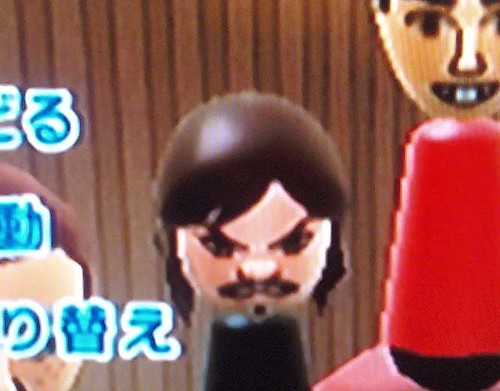
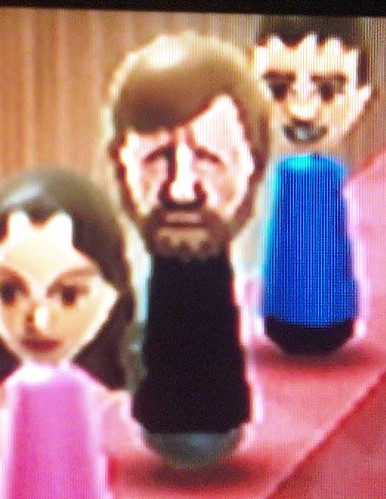
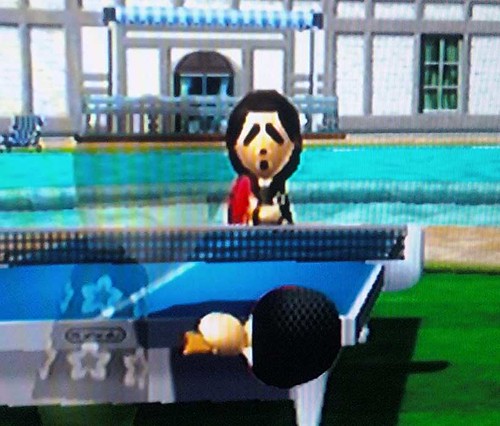
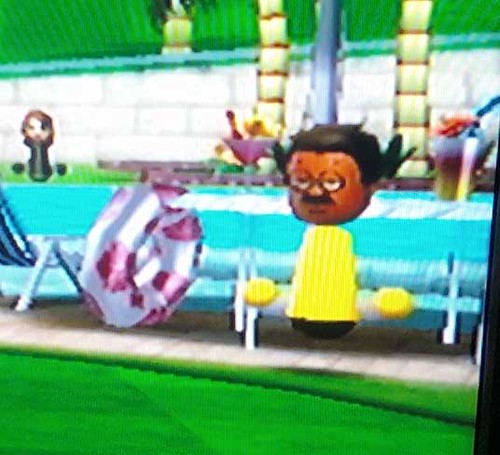
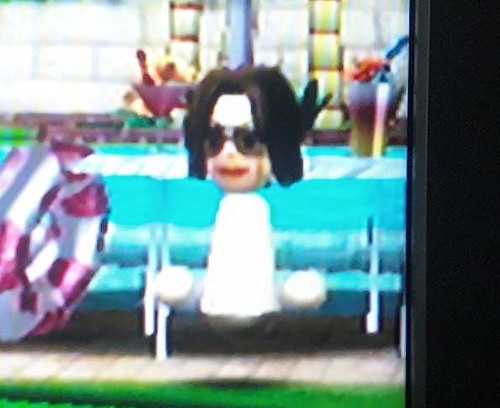
So I was playing my import copy of Wii Sports Resort, and started to notice that the other occupants of the island on which the game takes place were caricatures of famous people and characters which the developers added in:

Jack Black:

Chuck Norris:
The Scream dude:
Harry Potter:
Gotta be Weird Al:
Alvin:
Cleveland from Family Guy (there was also Chris Griffin and Quagmire, but didn't get a snap):
SpongeBob:


I'll be interested to see if they take this one out of the US release:


Update: Here's some more.

Escort Service

Tuesday, May 26, 2009
I can't remember the exact moment, or the circumstances, but I'm pretty sure I was impressed, delighted and amazed the first time I saw a computer-controlled character in a video game fight alongside me.

I'm not talking about Sophia from 1992's Indiana Jones and the Fate of Atlantis, a computer-controlled character who would simply follow you from room to room and wait while you did whatever it was you needed to do. You would play AS Sophia from time to time, generally to help Indy out of a jam, but the rest of the time she was there as a sprit guide.

This was innovative at the time (as was most stuff from early LucasArts). There was a time when the idea of a player character period was innovative, following from games like Defender, Pong, Lunar Lander, Asteroids, etc. But here we had ANOTHER character without a 2P controlling her.

But here's the thing. Sophia was dumb. She had strict hard-coded responses to questions asked of her, and when controlling her, was only ever meant to do exactly what LucasArts intended YOU to do with her. That might have taken a while, but since she could only respond to the objects you had her interact with, her responses either advanced you further along the path, or indicated that you were barking up the wrong tree. I'm not saying that Sophia, the character, was dumb, or that Sophia the concept was dumb. That would be wrong on both counts. But Sophia as a piece of computer software, as an actor able to function independently in the game was literally dumb, unable to concieve of and act on information that the player didn't provide.

And that was PERFECTLY fine. LucasArts knew that she didn't need to have intelligence, that they weren't going to be able to give her intelligence, and if they had, it wouldn't have improved the game much. So they went with a gameplay mechanic that made sense in the context of the game, and Sophia is one of the most beloved characters in Gaming. (Beloved in the sense that she's actually charming and interesting, not that she can carry 4,000 Big Guns and jump and kill aliens or whatever.)

Compared to this, Alyx, from 2004's Half-Life 2 is an amazing piece of software wrapped up in the guise of a character. She does interact with you and the world, commenting on your abilities, and helping you shoot... well whatever you're shooting at the time. Going from independently-acting sidekick to scripted drone is seamless, and really provides the gamer with the sense that she's a fully fleshed-out and deep character, 1000 times more interesting and charming than that game's Player, Gordon Freeman (mostly because she actually, you know, talks). Well, of course a game made a decade later is going to be more sophisticated. Alyx is by far the best computer-controlled character in any game I've ever played.

So what's this all about?

Even Valve, the creators of that 5-year-old masterpiece (5 years?? Already?), knew that their artificial intelligence wasn't good enough to completely convince you, and gave Alyx a conservative role in the game, staying behind you for the most part, and hiding, rather than trying to do a full-out assault on whatever the objective was. Even though the computer was ALSO controlling enemies, even a sophisticated character like Alyx isn't able to concieve of strategies and thinking that is humanlike enough to be effective in that situation.

Other developers on the other hand, fresh from their Intro to AI course at the local community college, don't share that same sense of modesty. They have a hubris which tends to ride into the disappointing, giving a share of the game's actual gameplay to their digital creations, rather than leaving it to the CPU sitting between the keyboard and chair. I hate games like this with a passion. But at least those characters are supposed to be helping you.

Enter the escort quest. Someone somewhere decided it'd be a super idea if you, the player, had to at some point "rescue" someone, or bring them from point A to point B, guiding them through whatever deathtraps spanned the two. Valve itself did this in the original Half-Life a couple times, though it never made the game's progression dependent on it. Games like Metal Gear Solid had times where the player would have to navigate whatever tricky situation he was in, while at the same time, making it safe for the important computer controlled robot that he was escorting.

It was at those points where scientists, high-ranking military officers, heads of state, other combat veterans, whatever, turned into the largest sacks of idiocy, showing no survival instinct at all, instead relying on the player to dive between the bullets or electrified floors that they would expertly avoid avoiding any instant your eyes were off them for a second.

No one is going to accuse Konami of being a poor developer of video games, but I would suggest a certain level of hubris in assuming that their Artificial Intelligence was good enough to give the player a rewarding experience in feeling like they were really working with someone to get through a tough situation. Instead you have people who your entire goal for 5 minutes is to keep safe, running around in circles in the path of enemy fire, falling into lava pits, and basically acting like a suicidial seizure victim. That'd be fine with me, if the game didn't require me to keep said victim alive to open a door, or get back to Washington, etc. etc. The worst is getting the person nearly there, having their life bar finally vanish because your camera was pointed at, you know, the goal, only to have them take the opportunity to run head first into the nearest bullet. A fact you are only aware of because the game instantly stops, and tells you Game Over, as though time itself hinged on the survival of this loon with no instinct for self-preservation.


This is bad enough when it's for one or two missions in a game, but for games where it is a large chunk of the action, like Resident Evil 4, it totally saps any desire to keep playing for me. I feel like if Ashley isn't smart enough to keep her head down when confronted with hordes of brain affectionados, then it's probably for the better that the President never see his daughter again. She's just baggage when the world rests on the shoulders of YOU. Taking care of one lobotomy patient while you're supposed to be saving the planet from the end times seems counterproductive, contrived and just plain irritating.

This makes the game not about defending the character from whatever trials await you and them, but about definding the character from themself, which is frustrating and stupid.

So what does Capcom do? Release Dead Rising, of course! A game which is basically a string of escort quests where the only consolation to your charge's suicidal tendency is that the opponents are just as stupid, often sitting there and ignoring you completely while you hit their next-door-neighbor with a shopping cart. Let me be clear: the concept of Dead Rising - swarms of slow-moving, slow-witted enemies and myriad ways to dispose of them - is not good enough to overcome the escort-questyness of the execution (har har).

Until game AI is good enough to simulate human thought, or at least approach it, these missions should be eliminated from all games. This will take nearly forever, which is ok. I'm fine with never seeing another one again. The fact is that AI still isn't good enough - even from top-tier developers in 2009 - to be convincing, and nothing highlights that more than the escort quest. So do yourself a favor, and stop including it in games, and we'll stop noticing.

If you need filler, consider turning your main character into a slow-moving, boring werewolf for 2 out of every 2.5 hours instead. I for one would prefer that epic failure.

[thanks to GameDaily for the image]

Freeman's Mind

Monday, May 4, 2009

"Is that an Mp5? IT IS! Now I can solve up to 800 problems a minute!"

Many of you may know of Gordon Freeman, the silent protagonist of Half-Life. But what's he thinking when he's escaping the Black Mesa research facility?

Pretty much the same thing as you, as it turns out.

Old-School Mac Games: Uninvited


Unlike most people who play video games these days, I cut my teeth on early Macintosh games. Growing up, our first real computer we had around the house was a Mac SE (well, the real first one was a Trash 80, but that's a whole different story).

Though it was a tiny market, early Macs had a surprising amount of quality game software. One of my favorites was the MacVenture series of point-and-click adventure games. First released in 1985, the four MacVenture games can lay claim to being the very first point-and-click adventure games.

Taking advantage of the high-resolution graphics and the standard Mac window interface, the MacVenture games let a player simply drag items from the first-person screen int the inventory, or onto another item. The writing was top-notch, frequently witty, and in many of the games, downright unsettling.

While the series began with Deja Vu, my fondest memories of the MacVenture series was Uninvited, an atmospheric haunted house story, where the protagonist awakes to a crashed car and a missing little brother, and must venture into a creepy old mansion to rescue him.

While the games were made for the Mac originally, their popularity led to them being ported to other systems. The DOS and Amiga versions made the transition relatively unscathed, but the NES ports were savagely cut down, with huge portions of the gameworld excised, gameplay simplified, and most horrifyingly, most of the text was gutted and replaced with simple, short, declarative sentences. Unfortunately, the popularity of the NES compared to early-era Macs has meant that most of the people who know of Deja Vu, Uninvited, or Shadowgate, are only familiar with the simplified, zombie versions released for the NES.

So if you're hungering for a nostalgic trip to the early days of adventure gaming, grab an early Mac emulator for current-vintage Macs, or for other operating systems, including Windows and Linux, and dig up a copy of Uninvited (or Deja Vu or Shadowgate), and revel in the joys of really old-school adventure gaming.

Peggle: The Quickening

Monday, April 27, 2009

This is not a game you can be good at. You can suck, but you'd have to try.

I guess that's the whole point of "casual" games, giving the people who play them the perception that they're not sucky at videogames by taking out nearly all requirements for human interaction.

This game relies more on luck than anything even approaching skill. Even the special moves the computer allows, designed to "maximize" your score, fare no better than me randomly shooting somewhere near an orange peg.

Levels aren't randomly generated, but the colors of the pegs ARE random, so even if you master one iteration of it, when you fail, and replay the level you basically have to start from scratch. Imagine playing Sonic the Hedgehog with all the platforms still in the right place, but the badniks have been randomly changed all over the level. Except in Sonic, you could just slow down and complete the level. In Peggle, you simply have to keep playing until luck decides you can progress. Whoo.

This is a game so devoid of the need for a player that it's available to play inside World of Warcraft, a game itself which is farmed out to masses South Koreans because people can't be bothered to even play it, and which requires all the skill of "click here to attack" during the most exciting parts of the game.

Perhaps Yahtzee said it best: [Peggle] is a game for old people and stupids.

So why can't I stop playing it?? I can only imagine it's like that episode of the Monkees where everyone who watches the TV broadcast is immediately hypnotized. There must be something in the game that makes you want to play it, but where normal games satisfy this urge with boobies, this game is more devious, somehow tapping into your optical receptors directly and short-circuiting your brain.


Eldritch: Okay, coming in to this late, but I was mulling it over, and I think that Peggle (and all the PopCap games) have some relevance for our recent discussion of open-source gaming. Here you have some really quite frivolous games, but the one thing that they have in spades is good design and nice interfaces. I mean, the Peggle menus are positively lickable. And that sort of thing goes a really long way towards making the games feel like more of a complete project (and by contrast, makes so many open-source games feel like a chore). I can't help but be impressed by the production values on even these very forgettable games.

Somewhere in the Carribean...

Friday, April 24, 2009
"Turn around," she said, into my earpiece.

We had been out for a few days, tediously but not unenjoyably cataloging for hours at a time. She had been out more than I had, exploring on her own, and she had excitedly forced me to join her this time.

There were rumors floating around about this find, which I had dismissed. I didn't believe a creature so rare to begin with would be in this part of the world.

I was wrong. I awkwardly turned around and widened my eyes. She had even seen it before, the reason for her excitement, and was still silent as it swam slowly by. Which took some time for a sperm whale.

Taking out my new underwater camera, I took a few shots, but without a wide angle lens, it was somewhat pointless. It wasn't close enough to touch, but it was close enough that I was completely unaware of its scale. I felt overwhelming gratitude to her for showing me this amazing creature.

We got back to the boat, and I wrote the sighting down in my journal, and said goodbye as she jetted off on her ski-doo. Nighttime had forced us to stop diving, as we had no lamp, but it was just as well. Hard to top her find.

I sat down on my deck chair and watched the sun retire behind the low mountains to the west.


Then I shut off my Wii.


Endless Ocean isn't really a game, as such. But to call it an "ocean simulator" robs it of a lot of its playability. It implies that there's no point as you can't affect nearly anything in the game world. No, there's no boss, to fight to save the world, no conflict. No, there's no levelling up, no points, no frustrating throwing of controllers against the wall. There's even less plot than you get in Super Mario Bros. But as you progress through the game, taking would be Cousteaus out on tours, stocking aquariums, and other seemingly mundane "missions", you'll notice less and less.

I enjoyed this title quite a lot. Developed by Akira, the same team at Capcom responsible for the Street Fighter series (really), it is a spiritual successor to their "Everblue" series, available in Japan and Europe. Though somewhat less focused on intrigue as Everblue, Endless Ocean is perfect for diving into (ha?) and relaxing with.

You start off with a pretty feeble character-creation tool, which is ok, because like most everything else in Endless Ocean, it doesn't matter. You'll meet your research partner, who gives you an obligatory tutorial. There's no rush to learn everything; there's no rush to even do anything. The game is just above a screensaver in terms of excitement. Once in the water, you'll be delighted with a variety of sea life, beautifully animated. Your main "task" is to catalog, similar to catching all the pokemons, but you don't really have to if you don't want to. You won't be punished for just swimming about, enjoying the scenery. (And I'm not just talking about my diving partner).

Through the course of the game, you'll eventually get a lantern, the aforementioned camera, some fish food and a neato pen which is somehow able to allow you to draw shapes in the water. Whether you use this for communication, for helping yourself map (I used it more than once to find my way back out of a tricky underground cavern maze), or for drawing crude drawings is up to you.

You'll meet various non-fish sea life too, like penguins, seals and dolphins. The latter can be befriended and trained, and can accompany you on dives your partner can't be there for.

Let's talk about partners for a second. The game is primarily single player. Even with a partner, you'll often be off on your own, doing your own thing, but having a diving partner makes the experience much more connected, more safe (though the game does shield you from death, it's a good reminder for the kids: Always dive in pairs!), and just more enjoyable. Parners are invited onto your boat over the Nintendo Wi-Fi connection through an innovative in-context ladder. When you want them to show up, you lower your ladder into the water. When they want to show up, they arrive on their jet-ski and come up the ladder. Fourth wall saved.

The game isn't perfect. The first and most common criticism is that there's no end. If you're positive this game isn't for you, that'll be enough. But that sort of thing might be good for casual gamers just looking for a relaxing time. The second is the music - though the tracks are pleasant to swim to, they tend to get repetitive if you're in the water for very long, as the song you choose to dive to is the only one that will play while you're down there. And don't think you'll have a hard time making a choice. The game has two songs to choose from. It does however, have the option of awkwardly pulling MP3s off the Wii's SD card slot, so you can jazz up your dives with "Hot for Teacher" or whatever. The title Endless Ocean refers to the game's lack of endgame, not the ocean's breadth. You can't swim forever; you're restricted to your set of archipelagos, but it's large enough not to be boring. Finally, despite the amazing animation underwater, upstairs is a different matter. You lurch around on your boat with animations that are literally laughable. I found this charming, you may not.

All in all, it's a great way to spend the evening hours, and I heartily recommend picking it up, especially if you have someone to play with. Let her find all the goodies first, so you don't have to.

We may have days....

Thursday, April 23, 2009
George Lucas figured out a long time ago that the key to profitization wasn't to make a good movie and reap the rewards and cash that that honor bestowed. You could make a LOT more money on merchandising. And so, instead of movies that lent themselves to humor and style and depth, you had movies that led themselves to cool action figure playsets. This removed a lot of the charm of the movies - to make room for more opportunities to sell toys, so we got dead Ewoks (though oddly never an action figure of him) and the greatest killer in the universe (aside from Vader himself) being killed accidentally by a blind man with a stick.

So Lucas is a lost cause. But LucasArts oddly isn't. Which SUCKS, because I'd really love some Grim Fandango action figures.

Tim Schaefer, now at his own DoubleFine productions, never got the recognition he deserved outside a core group of adventure gamers. Even his later platformer Psychonauts, rightly hailed as a masterpiece of the genre, had sales not even approaching its greatness. But at least DoubleFine has the right to do as it pleases with its properties.

Tim. Make action figures. Make a small run, if you have to. Your fans will buy them. As long as you can make even a little profit, it's worth it. Use the money to market your games. Repeat.

I won't consider you a sellout, I promise. Just don't take it too far, and release a Grim Fandango prequel: The Death of Manuel Calavera.

Wow me.

Wednesday, April 22, 2009
Given the competition in the video game industry, what can you do to make your game stand out on store shelves?

Well, you can try copying another game, that's coming out and hope that the non-serious gamer (or mother) won't be able to tell the difference. This happens all the time with poorly-made rushed movies that coincide with upcoming blockbusters, so why not make it work for you?

You can go with the old standbys, Tits and Gore. Also popular are big burly men, and dusty, grainy action images of soldiers. But of course this relies on you making the sort of game that needs those things on the cover, pandering to the widest possible audience. (obligatory call to stop making WWII games)

Why not try some subtlety? You could make your cover look like a book from the 1960's. Gamers seem to respond well enough to that to make their own, even. How about classing it up? Make your cover show that you are the Criterion Collection of games. Show that you love the product as much as you hope a potential buyer will. Or have some fun.

This approach is somewhat backwards. Gamers have to like the game to make to make alternate or fake covers, and that means you have to sell it first. All the games in the posts above were bought and loved with whatever cover they originally shipped with. I know that the quality of a game has nothing to do with its cover. And plenty of terrible games have decent covers, too. If that helps them sell, so be it. But your game is good, and so you're back to the original problem.

Well, I'm inclined to think that for every person who buys a game based on cover and back cover description alone, there's at least one who buys a game they heard was good, or read a review of and has already decided to purchase when they walk into the store. This wasn't always the case, but with the internet and all, fewer and fewer people are dropping $60 to find out if the game matches the cover quality. People buy used games on impulse but you don't make any money off that, do you?

So let's do this. Make your game good. That way word of mouth and reviews will do the majority of your marketing for you. Make your covers compelling. Not tits-in-your-face, balls-to-the-wall, hoo-rah exciting. And I, for one, will promise to at least look at your game in the store, which is more than I can say for the cookie cutter covers I see in there all the time. (See how nicely I avoided even mentioning the better-than-average cover of Rock Band?)

Or don't. Covers might not even be around in a year or three, thanks to digital distribution. But please, do find some other way to show you've put care and love into your game. We'll say thanks with money.

Thanks to Mike Mayday, who can be reached via wp.pl for the drawing I used in my Neverhood box art.


Eldritch: Way back in the day, Mac games had some truly amazing box design. Forget the plain old rectangle, games like Marathon 2: Durandal were triangular, with a flat back and a raised front, and the recessed Marathon logo in the middle. Then there was Spectre Supreme and Spectre VR, which had boxes that were angular representations of the tanks from the game. Beautiful to behold, but such a pain to open.

Fun fact: Spectre VR was packaged with a free copy of Neil Stephenson's Snow Crash way back when. How's that for cross-promotion?


Pseudonym:MMMMMM, like the old Sierra games. Square, yes, but consistent, lavishly-painted covers, beautiful context-providing instruction manuals, maps... those were the days. Nowadays you get a DVD case with a PDF manual. Better for the environment, more expensive, and not as good.

I wanna rock!

Monday, April 20, 2009

This was going to be a post about the crazy confusion a new Guitar Hero convert would have to face in order to figure out how to get what songs onto whatever console(s) she might have. The questionable practice of putting maybe 13 good songs, 10 decent songs, and a whole lotta crap in each game in order to stretch the licenses out over games and into downloadable content is very annoying and has led to a lot of confusion.

As a Wii owner, I'm in the worst position one can be in with regards Guitar Hero/Rock Band, as a lot of songs never made or will make it to my console, which is odd considering how well it sells. Still, I can consider myself fortunate that I also own a PS2, which means I can play the best Guitar Hero game, Guitar Hero, and the worst (rocks the 80s, which was shamelessness taken to a new extreme). But it saddens me that those Guitar Hero 1 songs can't be played in multiplayer mode and I have to hook up my PS2 to play them.


Ideally, you could buy the instruments you want, and a DVD with no content on it, and then download only the songs you want from the downloading services. They'd have the entire catalog of all the songs that were done (by that company, Rock Band and Guitar Hero are two separate properties, so I can't be totally unrealistic) and you could just make your own custom game. I personally could care less about the rockers, the customizable guitars, extra characters, venues, etc. They make the game a bit more interesting for people watching, but meh, I could do without.

I'm aware that playing Guitar Hero 1 made me actually like some of the songs I had never heard enough to include them on my "custom" set list, but there's no reason a song couldn't play, say, twice before you had to buy it, or you might listen to the song itself and not get to play it until you bought it. All of this is moot anyway, since you can't do what I'm imagining. The real problem is this: by having so many customers interested in the game, it's become necessary to make the songs available in each game extremely varied, from 80s pop ballads to country to death metal to whiny, annoying modern "rock". Games based in certain genres seem to be the key here, but instead, out comes "Guitar Hero: Metallica" and "Guitar Hero: Aerosmith" each of which include no more than 5 songs I'd like to play on them. Big names sell. Licenses sell. But not to me. Not unless "Guitar Hero: Alice in Chains" shows up in the future.

I don't want this post to turn (any more) into a rant about certain types of music and how terrible some of the songs on the games are, but for the sake of potential curiosity, click the link to see the songs I'd put on my customized Guitar Hero game, (not that I can actually get many of these songs on my console or play them with my controllers). And before you mention it, yes, "Godzilla" is on there twice. It's that good.

More...

GH1: 22/47
"Ace of Spades"
"Bark at the Moon"
"Cochise"
"Crossroads"
"Fat Lip"
"Godzilla"
"Godzilla"
"Heart Full of Black"
"Hey You"
"Higher Ground"
"Infected"
"Killer Queen"
"More Than A Feeling"
"No One Knows"
"Sharp Dressed Man"
"Spanish Castle Magic"
"Symphony of Destruction"
"Take It Off"
"Take Me Out"
"Texas Flood"
"Thunder Kiss '65"
"You Got Another Thing Comin'"
"Ziggy Stardust"

GH1-Bonus Songs
"All of This"
"Behind the Mask"
"Caveman Rejoice"
"Eureka, I've Found Love"
"Even Rats"
"Fire It Up"
"Get Ready 2 Rokk"
"Hey"
"Sail Your Ship By"

GH2: 27/40
"Beast and the Harlot"
"Can't You Hear Me Knockin'"
"Carry On Wayward Son"
"Cherry Pie"
"Crazy on You"
"Free Bird"
"Freya"
"Girlfriend"
"Heart-Shaped Box"
"Jessica"
"John the Fisherman"
"Killing in the Name"
"Last Child"
"Misirlou"
"Monkey Wrench"
"Mother"
"Rock This Town"
"Search and Destroy"
"Shout at the Devil"
"Strutter"
"Surrender"
"Sweet Child O' Mine"
"Them Bones"
"Tonight I'm Gonna Rock You Tonight"
"Trippin' on a Hole in a Paper Heart"
"Woman"
"You Really Got Me"

GH2-Bonus
"Jordan"
"Less Talk More Rokk"
"Soy Bomb"
"Trogdor"

GH:80s 12/30
"Because, It's Midnite"
"Heat of the Moment"
"Hold on Loosely"
"Holy Diver"
"I Ran (So Far Away)"
"I Wanna Rock"
"No One Like You"
"Synchronicity II"
"Turning Japanese"
"The Warrior"
"We Got the Beat"
"What I Like About You"

GH3: 15/73
"Bulls on Parade"
"Black Magic Woman"
"Cherub Rock"
"Cult of Personality"
"Even Flow"
"La Grange"
"My Name Is Jonas"
"Paint It Black"
"Pride and Joy"
"Rock and Roll All Nite"
"Rock You Like a Hurricane"
"Same Old Song and Dance"
"The Seeker"
"Story of My Life"
"Sunshine of Your Love"

GH3-DLC
"This Is a Call"
"The Devil Went Down to Georgia"
"Any Way You Want It"
"Don't Speak"

GH WT: 24/86
"About a Girl" (Unplugged)
"American Woman"
"Band on the Run"
"Beat It"
"Do It Again"
"Everlong"
"Eye of the Tiger"
"Float On"
"Go Your Own Way"
"Hey Man, Nice Shot"
"Hotel California"
"The Joker"
"Livin' on a Prayer"
"No Sleep Till Brooklyn"
"On the Road Again" (Live)
"The One I Love"
"One Way or Another"
"Ramblin' Man"
"Rebel Yell"
"Some Might Say"
"Stillborn"
"Sweet Home Alabama" (Live)
"Today"
"Up Around the Bend"

GH WT - DLC
"Hot Blooded"
"Jessie's Girl"
"No Rain"
"1979"
"Gimme All Your Lovin'"
"Fat Bottomed Girls"
"The James Bond Theme"
"Very Ape"
"Stay Away"

GH-Aerosmith: 5/31
"I Hate Myself for Loving You"
"All Day and All of the Night"
"Livin' on the Edge"
"Love in an Elevator"
"Sex Type Thing"

GH-Metallica: 3/49
"Enter Sandman"
"No Excuses"
"Stacked Actors"


RB1: 14/45
"Black Hole Sun"
"Blitzkrieg Bop"
"Cherub Rock"
"Creep"
"Dani California"
"(Don't Fear) The Reaper"
"Enter Sandman"
"Gimme Shelter"
"In Bloom"
"Learn to Fly"
"Orange Crush"
"Roxanne"
"The Hand That Feeds"
"Vasoline"

RB- Bonus: 2/13
"Brainpower"
"I Get By"

RB2: 29/84
"Alive"
"American Woman"
"Any Way You Want It"
"Bad Reputation"
"Carry On Wayward Son"
"Drain You"
"E-Pro"
"Everlong"
"Eye of the Tiger"
"Float On"
"Give It Away"
"Go Your Own Way"
"Hungry Like the Wolf"
"Livin' on a Prayer"
"Lump"
"Man in the Box"
"New Kid in School"
"One Way or Another"
"Pinball Wizard"
"Pretend We're Dead"
"Psycho Killer"
"Ramblin' Man"
"Round and Round"
"Spirit in the Sky"
"Spoonman"
"Today"
"We Got the Beat"
"White Wedding (Part 1)"
"You Oughta Know"

RB2- DLC: 77
"Fortunate Son"
"My Sharona"
"Heroes"
"Queen Bitch"
"I Fought the Law"
"Buddy Holly"
"Interstate Love Song"
"Last Train to Clarksville"
"Wonderwall"
"Siva"
"Roam"
"Sex Type Thing"
"March of the Pigs"
"The Collector"
"The Perfect Drug"
"Still Alive"
"Sprode"
"Call Me"
"Zero"
"My Best Friend's Girl"
"Snow ((Hey Oh))"
"Burn"
"Capital G"
"Last"
"Rio"
"Breaking the Girl"
"Under the Bridge"
"Gone Away"
"Breed"
"Lounge Act"
"On a Plain"
"Polly"
"Something in the Way"
"Stay Away"
"Territorial Pissings"
"Dune Buggy"
"Feather Pluck'n"
"Pretty Noose"
"This Is a Call"
"You Got It"
"Entangled"
"Space Cowboy"
"Losing My Religion"
Ten (11)
Texas Flood (10)
Coulor and the Shape (13)


Eldritch: The song selection is one thing, but I can't help but put the songs in two very different classes: those by the original artists, and those by the unnamed Guitar Hero cover band. Honestly, I tend to skip right past the cover versions and stick with the original artist recordings. I just can't stand listening to favorite songs done in a mediocre way. Less of an issue for songs I don't like very much, but then I'd probably skip those by anyway.

I can see the appeal of an a la carte take towards Guitar Hero content. The gameplay is great, but (as with most games, really), it's all about the content. I'm a little leery of digital downloads for games, though. I think most game publishers would love to sell a game without any content and then nickel and dime the gamers for every bit of content. That makes me very nervous. It moves games (and other software) away from being a 'product' and more towards a 'service.' And whenever a company has control of your service (ISP, utilities, whatever), that generally means the same thing: higher prices and poorer service. But that's a whole different rant.


Pseudonym: Ah, I forgot to mention how terrible songs like Heart-Shaped Box and Them Bones are on Guitar Hero 3. Fans of the originals might have a hard time listening to the remakes. Fortunately the newer games are nearly all original master tracks, which is a blessing. Playing Stacked Actors is a joy that would not have been possible without the original recording.

I think it's ok to have DLC, provided it can be stored on external media. In the Wii's case, it is a necessity, but I can see your point. Is there any guarantee that the company will be around in 10 years when you want to play Guitar Hero 1 instead of the newly-released Guitar Hero: Wesley Willis. This is a common argument against DRM but it applies here. I didn't say that my idea would be good for the industry, just good for me. And while I'm dreaming, I'd like the blue shell removed from Mario Kart.

Open-Source Gaming (Mostly) Sucks!

Thursday, April 9, 2009

I'm generally a fan of open-source software. With amazing projects like Firefox, Ubuntu, VLC, and Wordpress (that list could be much larger), you could be fooled into thinking that you could run open-source software exclusively and be a happy computer user. Except when you consider gaming.

Perhaps it's because games require a cohesive vision that community-developed software can't provide. Or perhaps it's hard to marshal the development time and talent towards a project merely designed to amuse. But whatever the cause, the annals of open-source gaming are filled with badly designed, half-finished, buggy software that is painful to look at, let alone play for hours. There are scores of open-source gaming projects (much like many other kinds of open-source software) that have been abandoned for years, the only evidence of their existence being disused sourceforge pages. But games are seemingly devoid of any of the high-quality, polished projects that stand above the rest.

Even the much-touted gems of the open-source gaming world are, in a word, crappy. Projects like Frozen Bubble are filled with poorly-rendered graphics and amateurish interface schemes that are simply embarrassing. Lincity-NG, one of the most highly-touted open-source projects in terms of polish and graphics is a decent-looking game wrapped up in an interface that could have been (or was) made in MS Paint. The gameplay may be amazing (I doubt it), but there's no way to tell, since the various game structures are wrapped up in generic-sounding categories with no clear connection or intent, and there is no tutorial or single-player in-game introduction.

I could go on, but the list of gripes grows longer the further down the list of open-source games you go. For a long time, I took to complaining about open-source gaming, proclaiming that there was not a single game worth playing that was open-source and community developed (not a commercial game later released as open-source).

Until I played Battle For Wesnoth. A 2-dimensional, turn-based strategy RPG game, Wesnoth is the epitome of everything I'd come to think was impossible to find in an open-source project. It was complete, stable, and polished. The interface was clean and professional, and well laid-out to boot. The game includes a comprehensive single-player tutorial campaign, that walks you through all of the games' functions and rules, and leads directly in to one of the dozen or so polished, lengthy single-player campaigns that are included with the game's initial download. The art is fantastic. It won't push the boundaries of any graphics technology from the last decade, but 2-D, hand-crafted sprites are a pleasure to behold, and fit perfectly with the theme of the game.

So, I'm happy to admit that I was wrong about at least one member of the world of open-source games. I hope (skeptically) that it isn't the single exception that proves the rule.


More...
I agree with you for the most part. Linux games tend to be small-scale, casual-style games for the very reasons you mention. If you look at what it takes to produce a game that has depth, like Civilization 4, the financial and organizational resources available far outstrips effort in the open source world, but also lacks the creative vision of Sid Meyer. Open-source projects do have leads, but without a way to really get everyone on the same page, the results tend to be a bit jumbled.

It's worth remembering, too, that nearly all comprehensive open-source packages (all of them, in fact that you listed, except for VLC, and even that might be) have either current financial backing, in the case of Firefox, Ubuntu, or were at one time produced commercially and have since been given over to the community (see Firefox, again, and Blender). Projects that began as community open-source projects that are cohesive and usable are rare - even Linux was based on prior work by AT&T/Bell, and has had 15 years to get to the solid but sadly unusable (at least by the general populace) state it is in.

Which brings me to my next-to-final point: It is extraordinarily common in open-source that projects have far, far more programmers than designers, software or otherwise. I'm not saying that no programmer can design software, and I certainly wouldn't suggest that all proprietary software is pretty (in a spectrum as wide as MS Office 2007 to "Bob's Awesome Legal Solution 06", with a VB interface and access backend), but as a whole the open-source community is aware of the dearth of visual designers. Here's why: for obvious reasons, the concept and importance of open-source is generally in the domain of techies, nerds, geeks, etc. Visual designers, and I include many personal friends here, could not care less that Illustrator isn't free (or even free as in beer), they just know that it's by far the best tool for the job (I write this in shame, mourning the loss of Freehand. Adobe gets a post all its own someday soon. Edit: and here it is). So they use proprietary software, but it's not as if they chose it. They simply didn't even know that there was a choice.

There's a big push, especially in the economic strife, to educate folks about open-source, but if I'm honest, I don't see a revolution happening anytime soon. Open-source will be, at least for the moment, the domain of people who care more about the beauty and elegance of the source code to the game than the beauty and elegance of the interface and art resources of the game itself.

That being said, I'm a contributor to SuperTuxKart, an extraordinarily unfun open-source clone of Mario Kart. I don't know how to program, despite being a nerd, but I do know how to make art, and so feel valuable contributing. SuperTuxKart is not enjoyable in any sense of speed or skill, but the whole point of understanding open software is to contribute what you want, where you think it'll do the most good. Go download it and play it - the website itself makes my point much clearer.

My final point: Don't be so quick to dismiss MS Paint. Though I really doubt that anyone working on Lincity-NG used it. Not when there are open-source clones available.


That's a really good point about programmers versus designers. Looking at the list of open source games, the mix of genres skews heavily towards games that can let art design and story take a back seat (FPS, 4X strategy, racing, sim game, etc). Essentially, it seems like these are 'programmer's games,' where the technology and the engine are the central focus. Witness the almost-total lack of plot-based games. In fact, that's what made Wesnoth stand out even more: it almost stands alone as an open-source RPG game (even though it is a RPG-strategy hybrid).

I didn't talk much about the formerly-commercial-now-released-as-open-source games and engines, but there, the situation is just as bad. Look at some of the engines that have released totally as open source: the Marathon engine, the Doom engine, Quake I, Quake II and Quake III. Each of those games have included, or been modified to create deeply engrossing, innovative games, with intricate plots (Marathon, Hexen, Half-Life, Heretic, Alice, Medal of Honor, Jedi Knight, Star Trek Voyager: Elite Force, etc, etc). But look at what the open-source community has done with the same engines: a deathmatch FPS, but with aliens, a different deathmatch FPS, umm... another deathmatch FPS, but with teams, and of course, there's a slightly less sci-fi deathmatch FPS, and the list goes on.

Unfortunately, the dearth of good software design in the open-source community seems to undermine a lot of the more grandiose pronouncements about the value of free and open source software development. Every time I turn around, I hear about how open source software is going to take over the world, and commercial software development is a dinosaur industry, and everything will be great when all software is developed by happy programming communes. Well, unfortunately, as far as I can see, the open source gaming situation has, merely reinforced what I always suspected: great software takes a lot of work and a lot of money, and there's no amount of overblown hyperbole about freedom that will replace the work of well-paid software designers and programmers.


Let's not be hasty. I think there's a real market share potential for a lot of open-source projects. Some are just damn good value, even if they're not damn good. OpenOffice.org comes to mind. Despite it stagnating somewhat heavily for the past couple of major releases (New Feature: Graphs are antialiased!! - notheresstillnoexcelmacroimprovement), it's always been a rather good drop-in replacement for Office for a very very large percentage of the population, even if just for home use where sharing documents isn't as important.

Some are technical masterpieces. Blender has an unbelievable amount of features packed into 20 megabytes - one of the fastest 3d modelers I've ever used in terms of efficiency, a non-linear, node-based video editor, audio processing, even a fully-embedded game engine. Yes, the interface is really really awkward, but it runs on my Acer Aspire One perfectly well (despite the trackpad, which isn't Blender's fault) and, again, 20MB. The TRIAL version of 3ds max 2010 is 800MB. Is Blender better than max? No, of course not. But it runs natively on my Mac and my linux computer, interchanges between the two and has what I need 70% of the time. I've been a 3ds max user for over 10 years, and I still use Blender for a lot of stuff, because it takes longer for 3ds max to open than it does for me to fire up Blender, make the quick change to texture mapping or whatever, save it and close out.

And for some, they are truly superior to their commercially-backed equivalents. Asterisk, Apache, Firefox, etc. These pieces of software need the campaigning to counteract the marketing of Microsoft, say. Apache still has a higher user share than IIS, and for good reason. It's about a billion times more stable, and patches to it don't require a reboot. How stupid is that when you're trying to guarantee 99.99% uptime?

Finally, there is a surprising amount of open source software in niches where no commercial alternatives even exist, including embedded kernels for ARM and other non-x86 processors (not even Apple supports PowerPC anymore), statistical analysis, scientific data collection and processing, a ton of middleware, and perhaps most famously, Networking software such as port scanners.

I heartily nod my head in agreement as re: Nexuiz, OpenArena, etc. The best things about those games have all been cribbed from the original games they're based on. They might add lens flares or something, but it's hard to get any sense that the game itself is different from Quake 3, and often, as you say, with even less plot.

But for games that are designed with no plot in mind, like Flight Sims (some which are, apparently, even more accurate in flight physics than Flight Simulator (and still being worked on. This is one area where the commercial software disappointed fans by stopping work on the project suddenly. But don't worry, says Microsoft. You can still keep buying the last release!). Games like HedgeWars, a Worms clone with graphics that are surprisingly good (and cute) for an open game, don't need a plot, and would not benefit a lick by one.

I think there's a market for open-source games that are full of plot and sophistication (even if not in the graphics or sound), and I would remind you that there is quite a large community dedicated to that very idea, one that I have been mulling over joining and contributing to for quite a few years: Adventure Gaming. Again, one of the best games in the open universe (and in my opinion, ever) is a release of original source code: Ur-Quan Masters, but there are still a few games which have depth that certainly rival the plot of even showcases of modern commercial gaming, like Quake 4 (Plot: go somewhere and kill aliens), and Call of Brothers Warfare, 1944 (Plot: kill nazis and italians. Perfect for getting your aggressions out in a PC way if you hate germans and italians. 'No, It's 1944, so it's ok. Or whatever zombie shootkill game is released. I'm not saying these games aren't fun (I personally really like the zombie genre, one of my guilty pleasures) but I stopped playing Quake 4 about 2 hours into it and have never felt any need to continue. I've never played a WWII shooter. I'm simply saying that the commercial gaming world "cheats" in terms of plots too, but it's often better masked by a pretty face and DirectX 14.3 ShaderPixels and fluid simulation.

If open-source software was a boss for a video game, the flashing red 'weak point' would be... video games. Will there ever be a world where only non-commercial software is used? I don't think so. Things are worth what people are willing to pay, and people are willing to pay for good games. But I think of the open-source gaming situation as a bonus more than I think of it as an industry in and of itself. 'Linux also has games!', rather than 'Gaming on Linux sucks.' One of the first things I do when customizing a new Linux install is remove the games that come with it.

All of which are better than the games Windows comes with.